Jerusalem artichokes, also called sunchokes, are tall perennial sunflowers grown from edible tubers. Plant them in a sunny, well-drained, contained bed where their height and spreading habit will not crowd other crops. Harvest after the tops die back, and remove every tuber you can find if you do not want the patch to return.

What is a Jerusalem artichoke?
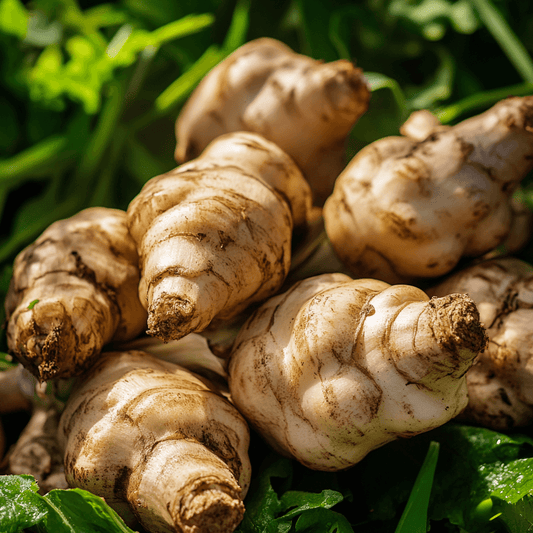
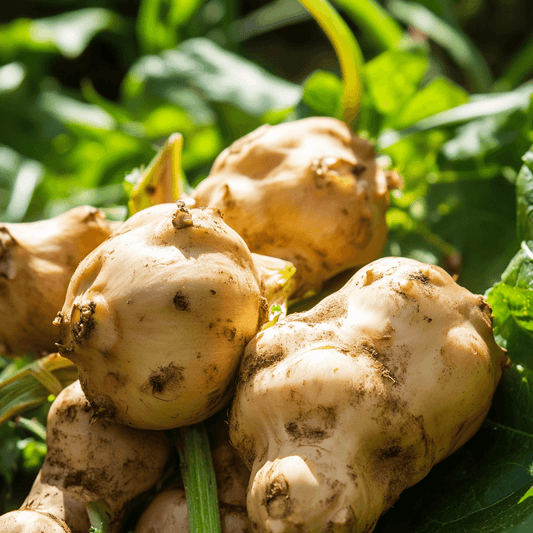
Jerusalem artichoke (Helianthus tuberosus) is native to North America and is unrelated to globe artichoke. Its shoots commonly grow 6 feet or taller and produce yellow sunflower-like blooms. The knobby underground tubers are the edible crop.
The plants tolerate a range of soils, but the best harvest and easiest digging come from loose, well-drained soil with consistent moisture. Heavy, waterlogged clay reduces yield and can encourage rot. Browse Jerusalem artichoke tubers and use the perennial vegetable crowns and roots guide to plan the rest of the bed.
Choose a contained site
Sunchokes spread from tubers and even small pieces left in the soil can sprout. Place them in an isolated bed, along a boundary where their shade is acceptable, or in a very large container. A shallow edging will not contain deep or overlooked tubers. Their tall stems may also need wind protection or staking.
Full sun supports the strongest crop. Space plants so air can move between them and so you can dig around each crown at harvest. Do not rely on unverified claims that the plant will automatically improve compacted soil or resist every pest and disease.
When and how to plant sunchoke tubers
Plant in late winter or early spring as soon as the ground is workable. Healthy small tubers can be planted whole; larger tubers may be cut into pieces of roughly 1–2 ounces, each with two or three visible buds. Let freshly cut surfaces dry briefly before planting.
- Loosen the bed deeply and remove perennial weeds.
- Plant tubers about 4–6 inches deep.
- Space them about 18–24 inches apart; allow more room for vigorous cultivars or difficult-to-dig soil.
- Water thoroughly after planting and keep the soil evenly moist during establishment.
If planting is delayed, store tubers cool and slightly moist so they do not shrivel or sprout excessively. Do not seal wet tubers in an airtight container.
Care through the growing season
Weed early, before the tall canopy closes. Water during extended dry periods, especially while the plants establish and during tuber development, but allow the soil to drain between irrigations. Mulch helps conserve moisture and makes late-season digging cleaner.
Use a soil test to determine nutrient needs. Finished compost may be sufficient in a reasonably fertile garden; do not automatically apply high-phosphorus fertilizer. Excess fertility can produce very tall tops without a proportional increase in usable tubers.
Stake plants or grow them beside a sturdy support where strong wind is common. Avoid damaging stems late in the season while the plant is sending energy to the tubers.
When and how to harvest Jerusalem artichokes
Harvest after frost kills the tops and the tubers have matured. Flavor often becomes sweeter after cold weather. Cut the dead stems, loosen soil well outside the crown with a fork, and lift carefully. Dig only what you can use if the ground remains workable; tubers store better in cool soil than in a dry refrigerator.

For storage, leave tubers unwashed, place them in a perforated bag with slightly damp packing material, and refrigerate. Inspect regularly and discard soft or moldy tubers. Reserve a few healthy tubers for replanting if you want the crop to continue.
Containment and common problems
- Unwanted spread: harvest thoroughly and pull volunteer shoots repeatedly. See how to manage Jerusalem artichoke invasiveness.
- Low yield: check sun, moisture, crowding, soil compaction, and harvest timing.
- Plants lodging in wind: stake early or move future plantings to a sheltered boundary.
- Limited space: follow the container cultivation guide.