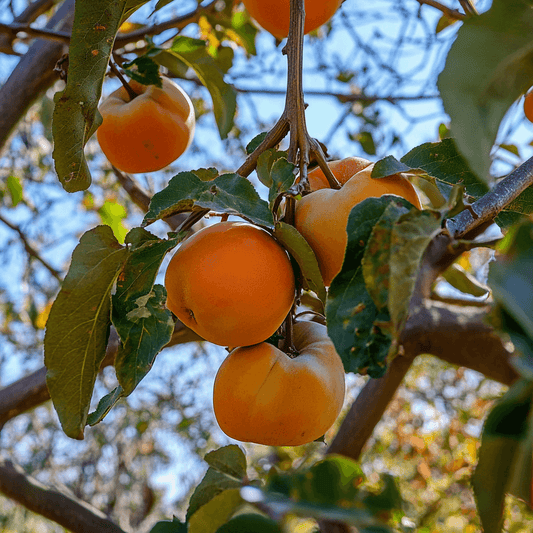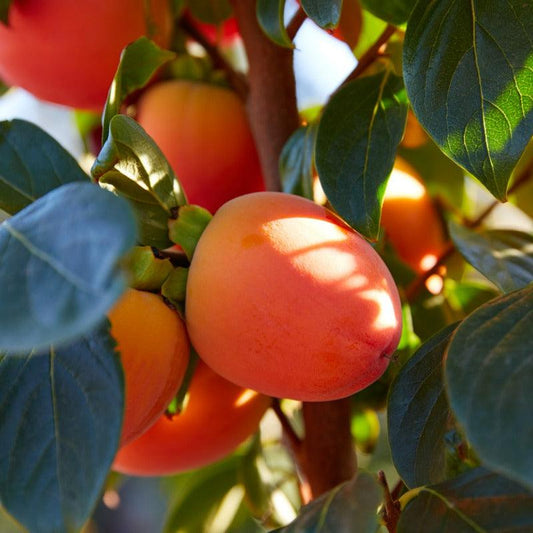

This guide provides a clear Fuyu–Jiro persimmon comparison, focusing on flavor, texture, tree shape, ripening behavior, and climate performance, so you can choose the best persimmon tree to grow in your backyard. Among the most popular non-astringent persimmons grown in backyard orchards today, Fuyu and Jiro stand at the top of the list. Both varieties offer crisp, sweet fruit, beautiful fall color, and dependable performance across a wide range of climates. Yet despite their similarities, they are not identical—and understanding their differences helps gardeners choose the best non-astringent persimmon for their space and taste preferences.
Explore our full selection of Persimmon Trees or learn more in our Comprehensive Guide to Growing Persimmon Trees. You may also find our article on American and Asian Persimmon Varieties helpful as you explore different options.
Flavor
Flavor is often the deciding factor for gardeners choosing between persimmon types, and the Fuyu vs Jiro debate typically begins with taste. Although they are both non-astringent—meaning they can be eaten firm—the two fruits have distinct profiles.
Fuyu Flavor Profile
Fuyu persimmons are widely known for their sweet, honey-like flavor. Many people compare them to a blend of pear, brown sugar, and cinnamon. When eaten firm, the sweetness is noticeable but balanced, and as the fruit softens slightly, the flavors deepen and become more aromatic. Fuyu’s taste is often described as warm and complex, making it a favorite for fresh eating as well as adding to salads or charcuterie boards. To learn how to keep your harvested persimmons in peak condition, see our guide on massaging persimmons to preserve them.
Jiro Flavor Profile
Jiro flavor is milder, with a clean, crisp sweetness that feels refreshing and light. While it still carries the characteristic honeyed notes of non-astringent persimmons, Jiro is typically less rich and more subtle than Fuyu. Some gardeners describe it as having a gentle spice beneath the sweetness, while others appreciate its delicate, almost floral undertone. Because it is less intense, Jiro appeals to those who prefer a lighter fruit flavor.
In a persimmon taste comparison, Fuyu wins in richness while Jiro stands out for its balanced, refreshing sweetness. Both are excellent—just suited to different palates.
Texture
Texture is one of the defining characteristics of non-astringent persimmons, and many gardeners seek them out specifically for their satisfying crunch.
Fuyu Texture
Fuyu has a smooth, juicy texture with a satisfying firmness that holds up well even when the fruit reaches peak ripeness. At the firm stage, Fuyu provides a crisp bite—making it a classic crisp persimmon—but it can also be enjoyed as it softens slightly. This versatility gives gardeners a wider window for use and makes Fuyu especially appealing for families who enjoy snacking straight from the tree.
Jiro Texture
Jiro persimmons are notably firmer than Fuyu and often retain their crunchy texture longer into the season. The flesh is dense and crisp, with slightly less juiciness than Fuyu. This makes Jiro an excellent slicing persimmon, perfect for salads, salsas, and lunchbox snacks that won’t soften too quickly.
For gardeners seeking a long-lasting crunch, Jiro stands out. For those who enjoy a bit more juiciness and versatility, Fuyu offers a broader range of textures.
Tree Shape
Understanding the growth habit and tree shape of each variety helps gardeners choose the right persimmon for their yard size and layout. Proper pruning is also essential—see our guide to pruning persimmon trees for better structure and fruiting.
Fuyu Tree Shape
Fuyu persimmon trees tend to grow in a rounded, spreading shape with moderate vigor. Mature trees typically reach 12–15 feet in height, though they can be kept much smaller with winter pruning and careful shaping.
Jiro Tree Shape
Jiro persimmons are more compact and upright, often reaching 10–12 feet at maturity. They form a tidier canopy that makes them perfect for smaller backyards, urban gardens, and raised beds.
Ripening Behavior
Although both Fuyu and Jiro are non-astringent and can be eaten firm, their ripening patterns differ slightly.
Fuyu Ripening
Fuyu persimmons tend to ripen slightly earlier in many regions, typically beginning in mid- to late fall.
Jiro Ripening
Jiro harvest timing is similar to Fuyu, often overlapping, but Jiro sometimes ripens a bit earlier in warm climates.
Climate Performance
While both varieties grow well across much of the United States, their performance varies slightly based on heat, humidity, and regional climate. For a deeper overview of where persimmons thrive, visit our Growing Persimmon Trees Guide.
Fuyu Climate Profile
Fuyu is considered one of the most adaptable persimmon varieties, performing well in USDA Zones 7–10.
Jiro Climate Profile
Jiro has excellent heat tolerance and is especially suited to warm inland climates.
In Summary
While Fuyu and Jiro share many qualities, they cater to slightly different preferences and growing conditions. Fuyu offers richer flavor, a rounder canopy, and excellent all-around adaptability. Jiro excels in crispness, compact growth, and heat resilience.
Explore our full selection of Persimmon Trees or learn more about growing persimmons in our Comprehensive Growing Guide.