
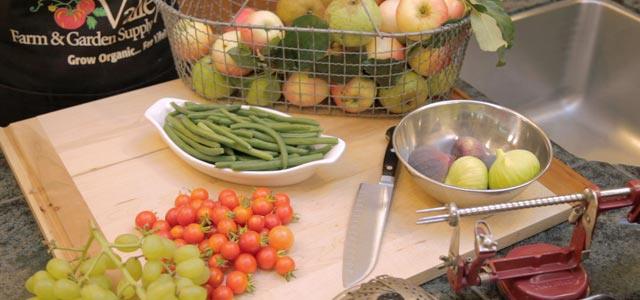
Preserve your summer harvest to enjoy in the wintertime or anytime -- without canning. Try your hand at dehydrating your fruits and vegetables. Bet you thought about dried apricots just now!
In our video Dehydrating Food, Tricia shows how to dry fruits and vegetables and make fruit leather. Pretty much no muss, no fuss, if you have a good dehydrator.
How and Why Does Drying Food Work?
Dehydrating or drying food is not a new concept. Our ancestors knew about drying food, and early American settlers dried foods such as apples, grapes, corn, and even meat. The concept is simple: organisms that spoil food need moisture to grow. Remove the moisture, and the bacteria cannot grow.
What to Dry?
Ripe, unbruised fruits and vegetables. Fruits are easier to dry. Try your hand at drying apples, apricots, pears, or grapes. For vegetables, dried zucchini, beans, or peppers are good options. Fruits that are not appropriate for drying are those with high moisture content, like melons or cucumbers.
Most herbs are easily dried. Basil, thyme, oregano, rosemary, or sage are a few that come to mind.
What Prep Do I Need to Do?
- Peel thick-skinned fruits and vegetables, slice uniformly, and remove pits.
- For waxy small fruits like grapes, blueberries, and cherries, create breaks in the skin coating with a 30-second dip in boiling water.
- Blanch vegetables with steam for 30 seconds, then drop them into an ice water bath.
- To prevent browning in apples, pears, or apricots, dip them in a citric or ascorbic acid solution before placing them on the dehydrator sheet.
Is It Hard to Make Fruit Leather?
No, it's easy!
Puree the fruit in a food processor. Then pour it on a special, non-stick sheet that fits your dehydrator, and spread it with a spatula to a uniform 1/8-inch thickness. The leather will keep longer if placed in the refrigerator or freezer.
How Do I Use the Dehydrator?
Dehydrators come with complete instructions and guides. Space slices evenly on the rack, or use disposable sheets. Start with the time guidelines in the guide and university articles or books listed below. Humidity varies, so check your produce during the process. Fruit pieces will be springy and leathery when done; vegetables will be tough or brittle. Fruit leather is ready when it is "leathery" with no sticky spots.
If you're looking for an off-grid option, consider using a hanging non-electric food dehydrator, which allows you to dry fruits, herbs, and vegetables using only air circulation—no electricity required. These passive dryers are great for sustainable food preservation and work well in dry, warm climates. Just like with electric dehydrators, be sure to spread items in a single layer and check periodically for doneness.
For More Information
University Extension Articles:
- How Do I Dry?, University of Georgia
- How to Dry Foods at Home, University of Missouri
If you want to use solar drying techniques, read The Solar Food Dryer.
Don't let your organic harvest go to waste -- preserve and dehydrate!
1 comment
We have had success with cucumbers and watermelon. We haven’t tried some of the other melons yet. The watermelon was a big hit and was like eating candy.